

1. Discovery
We begin by understanding the business, products, customers, existing website where applicable, ecommerce requirements and project objectives.
This establishes what needs to be built before visual decisions are made.
Prospering Digital provides ecommerce website design for UK businesses that need more than an attractive online shop.
We design ecommerce websites around the complete buying journey, from discovering products and navigating categories to comparing options, checking out and returning to buy again.
Our ecommerce web design approach combines strategy, user experience, responsive design, search-friendly structure and conversion-focused thinking.
Whether you need a new online store, a redesign or a more capable ecommerce solution, the goal is to create a website that makes your products easier to discover and easier to buy.
As an ecommerce web design agency working remotely with businesses across the UK, we can handle the website as a coordinated project while keeping important business assets under your control.
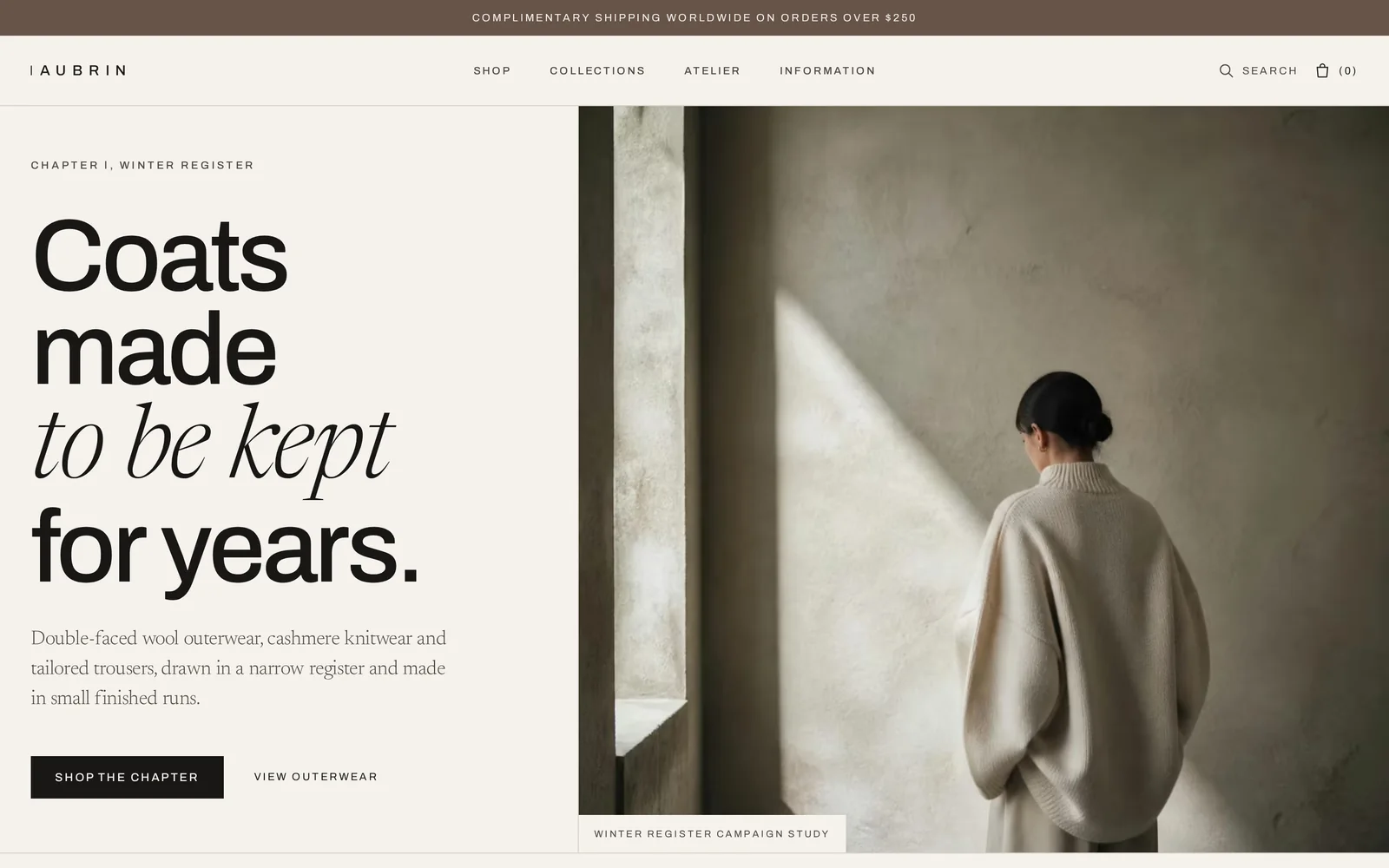
Good ecommerce site design starts with understanding how people actually shop.
An ecommerce website has to do more than display products. Customers need to understand what you sell, find relevant products, compare their options and move through the purchase journey without unnecessary friction.
Our approach to web design for ecommerce considers that complete journey. Product discovery, navigation, internal search, filtering, category organisation, product pages, calls to action, cart interactions and the route towards checkout all need to work together.
The exact design depends on the store. A specialist retailer with a small catalogue has different requirements from an ecommerce business managing thousands of products, multiple categories and complex customer journeys.
Instead of forcing every business into the same template, we plan the website around what customers need to accomplish and what the business needs to manage.
Our ecommerce web design services support businesses launching new online stores, redesigning existing websites or planning more capable ecommerce experiences.
Depending on the agreed scope, our ecommerce website design services can include strategy, information architecture, UX/UI design, responsive layouts, product and category page design, ecommerce-platform implementation, content structure, technical launch preparation and approved integrations.
Businesses searching for an ecommerce website design service may encounter very different scopes from different providers. We define what is included before the project begins so you can understand what is being designed, developed and delivered.
Our ecommerce website services can therefore be scoped around the actual requirements of the store rather than an unnecessarily large package.
Businesses may use different terminology when looking for these services. Whether someone describes the project as ecommerce design, web design ecommerce or web design e commerce, the important question is what the proposed project actually includes.
Before visual design begins, we look at how products, categories and important information should fit together.
For larger catalogues, information architecture becomes particularly important. Customers should be able to move from broad categories towards relevant products without repeatedly returning to the homepage or guessing where products are located.
Our ecommerce design process can include planning navigation, category relationships, product hierarchy and important customer journeys around the requirements of the store.
Product and category pages are central to effective ecommerce website designing.
Category pages should help customers understand their options and narrow a catalogue efficiently. Product pages should provide the information someone needs to evaluate an item and decide whether to continue towards purchase.
Depending on the business, this can involve product imagery, specifications, variants, pricing, availability information, delivery information, supporting content, reviews and other useful decision-making information.
We design these elements around the products being sold rather than applying the same product-page formula to every ecommerce business.
A customer who has selected a product should have a clear route towards completing a purchase.
Our ecommerce web design process considers the transition from product page to cart and from cart towards checkout.
The implementation available depends on the ecommerce platform and agreed project scope.
The goal is to reduce unnecessary confusion and create a clear purchasing journey without making unsupported promises about conversion rates or sales increases.
Customers may discover a product on one device and complete their purchase on another.
Ecommerce websites therefore need to remain usable across different screen sizes.
Our responsive approach considers navigation, product imagery, filters, product information, calls to action, cart interactions and other important store elements across mobile, tablet and desktop layouts.
Mobile layouts receive particular attention because smaller screens require decisions about which information and actions should receive priority.
For website design ecommerce projects, the objective is one coherent customer experience across relevant devices rather than treating mobile as an afterthought.
Custom ecommerce web design starts with the brand, products, audience and commercial requirements rather than simply changing the colours of an existing theme.
Our custom ecommerce services can be scoped according to what the store actually requires.
Some businesses need a carefully customised ecommerce platform or theme, while others require custom ecommerce website design with more specialised layouts, functionality or integrations.
The appropriate level of customisation depends on the project.
E commerce and web designing requirements can vary considerably between businesses, so our role is to define a scope around actual requirements rather than introduce unnecessary complexity simply so the finished website can be described as custom.
A strong ecommerce experience should still feel recognisable as your business.
Typography, imagery, layout, product presentation, navigation and interface components can form part of a consistent visual system.
This helps the online store communicate the brand while keeping important purchasing actions clear.
An ecommerce designer should therefore consider both visual presentation and how customers interact with the store.
Likewise, an ecommerce web designer should be able to explain how visual decisions relate to navigation, product discovery, responsive behaviour and the buying journey.
The objective is not design for its own sake, but an interface that supports the products and customer journey.
An existing ecommerce website does not always need to be rebuilt from zero.
If the platform and underlying technology remain suitable, a redesign can focus on navigation, content hierarchy, product presentation, responsive behaviour and the customer journey.
A larger rebuild may make more sense when the current platform limits important business requirements, the website has significant technical problems or required functionality cannot reasonably be added to the existing implementation.
We evaluate the existing store before recommending which direction fits the project.
That review can consider what should be retained, what needs improvement and what genuinely needs replacing rather than assuming a new website is always necessary.
The right ecommerce platform depends on what the business needs to sell, manage and integrate.
Platform decisions can be influenced by catalogue size, product complexity, internal workflows, required integrations, content-management needs, available budget and the capabilities your team needs after launch.
Prospering Digital can scope ecommerce development and design requirements around the platform agreed for the project rather than presenting one platform as the correct choice for every business.
Where Shopify is appropriate, our Shopify services can support businesses looking for an established ecommerce platform with store-management capabilities.
More specialised functionality or integrations should be evaluated during discovery before being included in the project scope.
A professionally designed ecommerce website does not automatically rank in Google Search.
During an ecommerce project, the agreed scope can account for crawlable navigation, descriptive page structures, logical internal linking, appropriate heading structure, descriptive titles, product and category organisation, image considerations and relevant technical implementation.
Where structured data is appropriate and supported, eligible markup can also be considered during implementation.
These measures establish useful website and search foundations. They do not guarantee rankings, traffic, conversions or sales.
Ongoing SEO strategy, content development and competitive search work can be scoped separately where required.
Conversion-focused web design for ecommerce does not mean claiming that a particular layout will automatically increase sales.
It means designing the store around the actions customers need to complete.
That can involve making products easier to discover, presenting important information at the appropriate stage, reducing unnecessary distractions, creating clear calls to action and ensuring important purchasing interfaces remain usable across devices.
The specific conversion goals should be established during discovery.
Depending on the business, these may include completed purchases, enquiries, account registrations or another measurable action.
Analytics can then be used, where included in the agreed scope, to understand how customers interact with the finished store.
Prospering Digital provides UK ecommerce web design through a remote-first delivery model.
We do not claim to operate a physical UK office.
Projects can instead be delivered through remote communication, documented requirements, scheduled review stages and an agreed project plan.
Businesses searching for an “ecommerce web design company UK” provider may encounter both local and remote agencies. Relevant considerations include whether the provider understands the project requirements, communicates clearly, defines the scope properly and can deliver the ecommerce experience being commissioned.
Likewise, a search for an “ecommerce website design company UK” may produce providers with different capabilities and project structures. Businesses should establish what each proposal actually includes rather than assuming physical proximity determines project quality.
UK-specific requirements that materially affect the website should be identified during discovery rather than assumed.
This allows ecommerce web design UK projects to address relevant market requirements without creating an artificial local presence.
There are many ways to compare an ecommerce web design company, ecommerce web designer or larger agency.
Businesses researching the best ecommerce website design for their needs should look beyond attractive portfolio screenshots and broad claims about results.
A useful comparison should establish what each proposal actually includes.
Consider:
An e-commerce web design agency should be able to explain its scope clearly.
The same applies when comparing independent e commerce web designers or other ecommerce specialists.
The goal is to choose a provider according to the requirements of your business rather than an unsupported claim that one company is universally the best.
We begin by understanding the business, products, customers, existing website where applicable, ecommerce requirements and project objectives.
This establishes what needs to be built before visual decisions are made.
We map important pages, product structures, categories, navigation and customer journeys.
For an existing ecommerce store, this stage can also identify which elements should remain and which require improvement.
The interface is designed around the agreed structure and brand direction.
Important templates can include the homepage, collection or category pages, product pages and other pages required by the project.
Responsive behaviour is considered during design rather than being treated as a final adjustment.
Approved designs are implemented on the agreed ecommerce platform.
Functionality, content, integrations and other development requirements are handled according to the approved project scope.
Before launch, the website is reviewed against the agreed requirements.
Review can cover important customer journeys, responsive behaviour, navigation, forms, links and ecommerce functionality included within the project.
After approval, the website moves through the agreed launch process.
Ownership, access, documentation, training and post-launch services should be defined according to the agreed package and project scope.
Ecommerce web design packages should reflect the requirements of the store rather than forcing every business into the same scope.
A smaller catalogue using established platform functionality may require a simpler project than a store with extensive categories, product variants, custom functionality, migrations and third-party integrations.
For the same reason, ecommerce website design packages should be compared according to what they actually include rather than price alone.
Prospering Digital provides project-based scopes after discussing the requirements. This helps establish which design, development and launch services are required before the final quote is agreed.
There is no single ecommerce website cost UK businesses can apply to every project.
The final price depends on factors such as:
An e commerce site cost can therefore vary considerably depending on the business and technical requirements.
A smaller ecommerce website using established platform functionality will generally require a different scope from a large store with extensive product data, integrations or custom workflows.
Prospering Digital provides project-based quotes after requirements have been discussed.
Any package, starting price or specific inclusion shown elsewhere on the Prospering Digital website should be confirmed against the final project scope before work begins.
Businesses should understand what they control before committing to an ecommerce project.
The agreed project should make clear who owns or controls important assets such as:
Where Prospering Digital creates or configures assets on behalf of a client, ownership, licensing and access should be documented in the agreed project scope or contract.
Clear ownership and access arrangements can make future website management easier and reduce unnecessary dependence on a provider.
Yes. Prospering Digital works remotely with ecommerce businesses across the United Kingdom without claiming a physical UK office.
Communication, review stages and project requirements can be handled remotely.
Yes, where the existing website and platform are suitable for the required work.
We first review what should remain, what needs improvement and whether a redesign or larger rebuild is more appropriate.
Yes.
The degree of customisation depends on the agreed project. This can range from customising an established ecommerce platform to a more bespoke design and development scope.
Shopify can be considered where it fits the project's requirements.
Prospering Digital also provides dedicated Shopify services for businesses requiring Shopify-focused design and development.
We can incorporate search-friendly website foundations into the agreed scope, including crawlable site structure, internal linking, headings and other relevant technical or on-page implementation.
Those measures do not guarantee Google rankings.
Broader ongoing SEO strategy can be scoped separately where required.
Potentially.
Integrations can be evaluated during discovery. Whether a CRM, payment service, shipping platform, inventory system, ERP or another third-party service can be included depends on the ecommerce platform, available integration method and agreed project scope.
The timeline depends on the size and complexity of the project, ecommerce platform, catalogue, functionality, integrations, content readiness and review process.
A project timeline should therefore be established after discovery rather than promising the same turnaround for every ecommerce website.
Post-launch services can be agreed according to the client's requirements.
These may include website maintenance, support or future development where included in a separate scope or ongoing service agreement.
Your ecommerce website should make it easier for customers to understand your products, find what they need and move through the buying journey.
Whether you are launching a new online store, redesigning an existing ecommerce website or planning a more capable ecommerce platform, Prospering Digital can help define and deliver the website around an agreed scope.
Service Area: Ecommerce Businesses Across the United Kingdom